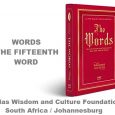
On the Miraculousness of the Qur’an. The verses discussed in this Word have been criticised by atheists or objected to in the name of science, but are proved according to scholarly principles to be flashes of miraculousness and eloquence
Introduction: Definition of the Qur’an, in three parts
First Light: consists of three ‘Rays’
First Ray: The eloquence of the Qur’an, which is at the degree of miraculousness, in two ‘Aspects’ and five ‘Points’
Second Ray: The Qur’an’s extraordinary comprehensiveness, in five ‘Flashes’, including five ‘Glows’
Third Ray: The Qur’an’s miraculousness pertaining to its giving news of the
Unseen, its preserving its youth throughout the ages, and its addressing all classes of mankind appropriately, in three ‘Radiances’, including three ‘Glistens’, three ‘Degrees’, and four ‘Principles’
Second Light: consists of three ‘Beams’
First Beam: The fluency, proportionateness, and harmony of the Qur’an as a whole
Second Beam: Ten ‘Points of Eloquence’
Third Beam: The Qur’an cannot be compared with other speech and writings
Third Light: Consists of three ‘Gleams’
First Gleam: Through scattering the light of guidance and miraculousness, each of the Qur’an’s verses disperses the darkness of unbelief and heedlessness
Second Gleam: A comparison between how Qur’anic wisdom and human
philosophy see the world
Third Gleam: The degrees of wisdom before the wisdom of the Qur’an of the purified scholars and saints and the Illuminist philosophers
Conclusion
First Addendum: From The Supreme Sign, The Observations of a Traveller
Questioning the Universe about his Creator, in six ‘Points’
A Flower of Emirdağ: A reply to objections about repetition in the Qur’an
Conclusion, in the form of two ‘Additions’